
Mercedes-Benz CEO Ola Kllenius believes India is poised to become a significant manufacturing and export hub for the luxury carmaker, citing the country's growing market, supplier ecosystem, and engineering capabilities. The company also anticipates electric vehicles (EVs) will constitute a substantial 20% of its India sales by 2027.

India's venture capital equity funding for startups has remained largely flat over the past three years, with a slight increase in total funding but a sharp decline in the number of rounds, indicating a concentration of capital in fewer, larger deals, particularly in deeptech and AI sectors.

Fairfax Financial Holdings, led by Prem Watsa, is divesting its entire 13.25 per cent stake in IIFL Finance through a block deal valued at approximately 3,454 crore, as it seeks to unlock funds for its acquisition of a majority stake in IDBI Bank.

India has prohibited the export of lithium-ion battery black mass to bolster domestic recycling capabilities and enhance the recovery of critical minerals like lithium, cobalt, nickel, and manganese. This move aims to ensure feedstock availability for local recyclers, reduce import dependence, and strengthen supply chains for electric vehicles and clean energy technologies, aligning with the Aatmanirbhar Bharat vision.

AI infrastructure firm AM Intelligence announced plans to invest over USD 20 billion in the next 15 months to significantly expand its data centre capacity, including firm orders for 20,000 NVIDIA Rubin GPUs. This expansion will bring its total capacity to 100 Megawatt initially, with a broader goal of 1 GW of compute-as-a-service capacity globally, establishing it as a major buyer of advanced AI hardware.

India has banned the export of lithium-ion battery black mass with immediate effect to ensure domestic availability of critical minerals and strengthen its battery recycling industry. This move aims to address the underutilisation of domestic recycling capacity due to inadequate feedstock and reduce reliance on imports for essential minerals like lithium, cobalt, nickel, and manganese.

Defence Minister Rajnath Singh has urged India to become a global leader in advanced technologies, particularly in non-destructive testing (NDT), to bolster self-reliance and defence preparedness. He highlighted the critical need for indigenous capabilities in inspection technologies, quality assurance, and reliable testing results for strategic applications, emphasising that NDT is vital for ensuring the integrity of defence systems without causing damage.

Union Finance Minister Nirmala Sitharaman has urged significant investment in AI infrastructure, semiconductors, and quantum technology, identifying them as India's next major growth frontiers. Speaking at an IIT Madras Alumni Association event, she emphasized the need to build hardware, skills, and institutional ecosystems to harness these technologies, countering perceptions that India is lagging in AI. Sitharaman also highlighted the potential for increased investment in defence production, particularly in unmanned systems and drones, stressing collaboration between academia and industry.

'India needs to create eight-nine million jobs annually to absorb the growth in the working-age population.' 'Failure to create productive jobs could squander the demographic advantage that we enjoy right now.'

Engagement with neighbours has gathered pace, particularly as the conflict in West Asia has exposed their vulnerability to energy supply disruptions.

Keep enough cash for near-term needs so that a bear phase doesn't force you to sell equities at unfavourable prices.

Restoration of indexation benefits on debt mutual funds, rationalisation of taxation for alternative investment funds are some of the demands.
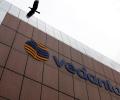
Mining magnate Anil Agarwal has cautioned that the government's decision to transfer operations of a producing offshore oil and gas block from Vedanta to state-run ONGC could send a "very wrong signal" to investors, urging policymakers to maintain regulatory stability.

India does not need to win the model race to win the AI era. It needs to be the country that cannot be switched off, can be trusted by its citizens, and is useful to the rest of the world, asserts Rajeev Srinivasan.
Collins Aerospace, a subsidiary of RTX Corporation, has commenced work on a new propeller maintenance, repair, and overhaul (MRO) facility in Bengaluru. This facility, set to be operational by early 2029, will be the first of its kind in India authorised by a foreign aerospace OEM. It aims to support regional turboprop aircraft and military transport platforms across the Asia-Pacific region, strengthening India's aviation ecosystem.

Indian benchmark equity indices, Sensex and Nifty, opened higher, driven by sustained foreign fund inflows and a significant drop in crude oil prices, even as global markets faced a downturn. Track Sensex, Nifty on November 17.

Non-resident Indians are increasingly investing in luxury homes in India, driven by geopolitical uncertainties, particularly the Iran war. This trend is observed across major cities like Mumbai, Bengaluru, and the National Capital Region, with developers noting a significant rise in NRI pre-sales. While some see it as a temporary shift, others believe India is becoming a stable, long-term investment destination for NRIs, especially those from West Asia.

MITRA (Mutual Fund Investment Tracing and Retrieval Assistant) helps trace inactive folios, but only if you have the investment details. How can the children provide those details when they do not even know whether the parent invested in mutual funds? The Investor Education and Protection Fund allows a search for unclaimed shares by name.

UBS analysts indicate that Indian stocks' valuation premium over emerging markets remains high, despite concerns over crude oil prices and tighter monetary policy impacting India's growth outlook. They suggest a potential slowdown in AI capital expenditure and moderation in oil prices could alleviate these pressures.

Preeti Lobana, Google India VP, stated on Wednesday that Google views AI as an "economic equaliser" and a democratic technology. Speaking at Google Cloud Day, she highlighted AI's potential to empower businesses, especially SMEs, in India's journey towards Viksit Bharat 2047. Google has committed USD 15 billion to scale India's digital and AI infrastructure, including an AI hub in Visakhapatnam, to support the IndiaAI Mission.

Andhra Pradesh is developing a 25,000 crore space city near Sriharikota, aiming to create a robust ecosystem for private space technology startups and MSMEs, with major deals already signed for rocket engine manufacturing, testing, and R&D.

The Indian government has amended direct overseas listing norms, allowing companies to list convertible debentures and preference shares, in addition to equity shares, on international exchanges in the GIFT IFSC. Unlisted public companies and those with negative net worth can also list, subject to conditions.

Net inflows into equity mutual fund (MF) schemes in India declined by 14 per cent month-on-month in October, reaching approximately 32,994 crore. This moderation was primarily driven by a cooling off in investments in smallcap and midcap funds, following a period of high growth, as investors engaged in profit booking.

Public shareholders in One 97 Communications (Paytm) have seen approximately 1.7 times returns on their investment over the past five years, driven by the fintech company's rising share price. This growth reflects a substantial increase in public ownership and institutional participation since its market debut, alongside improved financial performance and six consecutive quarters of profitability.

Microsoft has announced a voluntary exit programme for eligible employees in India, the US, the UK, and Canada, providing financial support and career planning resources to those who choose to leave the company. The offer, available to employees at level 70 and below in participating teams, aims to offer flexibility and allow businesses to adjust their workforce.

India's Production-Linked Incentive (PLI) schemes have achieved only 28% of their targeted employment generation by FY26, despite mobilising 76% of the envisaged investment, according to a NITI Aayog assessment. The report highlights an uneven translation of manufacturing growth into job creation and calls for refining the schemes' design, shifting towards demand-side support and sector-specific interventions.

Kempegowda International Airport Bengaluru (BIAL) has unveiled 'Phoenix', a repurposed Boeing 737-200, to enhance its Aircraft Recovery Training School. This initiative expands practical training for disabled aircraft recovery and opens the school's programmes to the global aviation industry, aiming to strengthen operational resilience and readiness in the aviation ecosystem.

Expenditure on government-funded health schemes and private health insurance in India has surpassed 20% of the total health expenditure in 2023-24, a significant rise since the Covid-19 pandemic, according to National Health Accounts estimates.

India's AI startups have the money to run their models, but a shortage of GPUs is delaying projects, increasing costs and limiting growth.
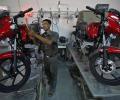
Bajaj Auto received the highest incentive payout under the government's Production-Linked Incentive (PLI) scheme for automobiles and auto components in FY26, securing approximately 625.65 crore. Despite exceeding investment targets, the scheme has significantly underperformed in job creation and incremental sales, generating only 46% of projected jobs and 23% of targeted sales by March 2026.

Market consensus suggest earnings growth of 11-12 per cent for large caps, 14-15 per cent for mid-caps and 18-19 per cent for small caps over the next two years.

New Zealand Prime Minister Christopher Luxon stated that the historic Free Trade Agreement with India, now in effect, will help grow both economies, allowing Kiwi businesses to reach over a billion more customers with significantly reduced tariffs, leading to 'more jobs and higher wages for Kiwis'.

India remains one of the Hyundai Motor group's most important and strategic markets globally. The initiative positions India as a strategic core market for the group's growth, emerging market expansion, and next-generation automotive innovation.

Gold is more than just a precious yellow metal in India; it is an emotion, a cultural pillar, and an asset that is passed down through generations. In Mumbai, whether it's the vibrant jewellery hub of Zaveri Bazaar or the local shops in suburban areas like Borivali or Thane, purchasing physical gold is a common tradition.

This ends a 16-month selling streak, the longest since 2006, after FPIs sold every month from July 2025 to October 2026 in the secondary market.

Indian equity benchmark indices Sensex and Nifty rallied in early trade, driven by sustained foreign fund inflows and a drop in crude oil prices. Foreign Institutional Investors (FIIs) have made a significant comeback, pumping in Rs 84,290 crore into Indian equities in the first fortnight of November.

Dig into the prospectus. Use the prospectus to understand the business and its risks.
Ministry of Information and Broadcasting Secretary Chanchal Kumar outlined the critical factors for the media and entertainment sector's next growth phase, including robust intellectual property, sustainable revenue models, and disciplined investments. Speaking at the CII Big Picture Summit, he emphasised the government's role in fostering an environment for creative enterprises and addressing challenges posed by digital platforms and AI. The CII White Paper also projected a USD 100 billion Indian M&E sector, advocating for stronger IP and regulatory reforms.

India's top shooters are set to compete in the ISSF World Championship in Doha, aiming to overcome their recent Asian Games disappointment and secure crucial qualification spots for the 2028 Los Angeles Olympics. The championship offers 36 quota places, making it a vital event for India's Olympic aspirations and a test for its high-performance coaching programme.

RBI Deputy Governor Poonam Gupta stated that India's economic growth momentum remains strong despite various global and domestic shocks, attributing this resilience to a diversified growth base and improved policy responses. She highlighted the economy's 7.8 per cent growth in Q1 and continued momentum into Q2, suggesting potential upgrades to growth forecasts.
